
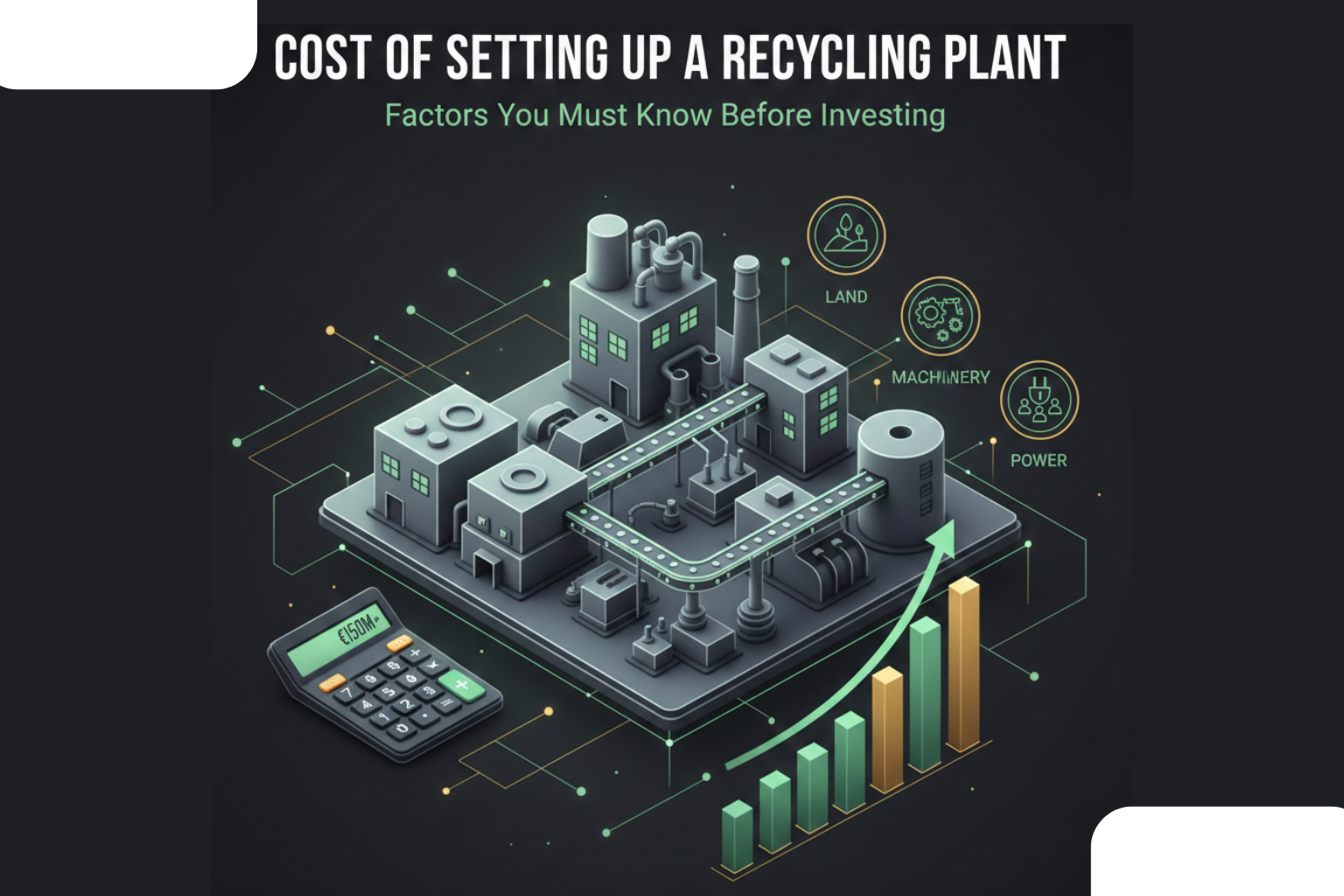
Cost of Setting Up a Recycling Plant: Factors You Must Know Before Investing
Starting a recycling plant is a smart business decision, but one of the most common questions investors ask is:
“How much does it cost to set up a recycling plant?”
The answer depends on multiple factors. In this blog, we explain all the major cost elements in simple language, so you can plan your recycling business with clarity and confidence.
Why Understanding Recycling Plant Cost Is Important
Many recycling projects fail not because of demand, but because of poor cost planning. Knowing the cost structure helps you:
- Set a realistic budget
- Avoid unnecessary expenses
- Choose the right plant size
- Plan future expansion
- Improve return on investment (ROI)
Key Factors That Decide the Cost of a Recycling Plant
1️⃣ Type of Waste Being Recycled
The cost varies greatly depending on the waste type, such as:
- Plastic waste
- E-waste
- Municipal solid waste (MSW)
- Industrial waste
- Hazardous waste
Each waste type requires different machinery, safety systems, and processing methods.
2️⃣ Plant Capacity (TPD / TPH)
Plant capacity is one of the biggest cost drivers.
- Small-scale plants → Lower investment
- Medium-scale plants → Balanced cost & output
- Large-scale plants → Higher capital but better long-term returns
Higher capacity means:
- Bigger machines
- More automation
- Higher power requirements
3️⃣ Machinery & Equipment Cost
Major machinery costs include:
- Shredders
- Conveyors
- Screening systems
- Separation units
- Washing and drying systems
Quality, automation level, and durability directly affect pricing and performance.
4️⃣ Land & Infrastructure Cost
Land cost depends on:
- Location (urban vs industrial zone)
- Total plant area
- Storage and movement space
Infrastructure costs include:
- Civil work
- Foundation
- Electrical setup
- Water systems
Proper layout planning can significantly reduce long-term operating costs.
5️⃣ Installation & Commissioning
This includes:
- Machine installation
- Trial runs
- Performance testing
- Operator training
Skipping proper commissioning often leads to breakdowns and losses later.
6️⃣ Operational Costs
Recurring costs include:
- Electricity
- Water
- Labor
- Maintenance
- Spare parts
Energy-efficient machines and smart plant design help reduce these costs.
Approximate Investment Range (Indicative)
💡 Note: Actual cost varies by project and requirements.
- Small recycling plant: Entry-level investment
- Medium recycling plant: Moderate investment with faster ROI
- Large recycling plant: High investment with long-term scalability
Instead of focusing only on initial cost, it’s better to focus on efficiency, output quality, and lifecycle cost.
How Proper Planning Reduces Total Cost
Smart planning helps you:
- Avoid over-sizing machines
- Reduce energy waste
- Improve material recovery
- Increase plant lifespan
A well-designed plant may cost slightly more initially but delivers much higher returns over time.
Long-Term Profitability Perspective
Recycling plants benefit from:
- Continuous raw material supply (waste)
- Growing demand for recycled output
- Government support for waste processing
- Expansion opportunities
With the right setup, recycling becomes a stable and future-ready business.
Conclusion
The cost of setting up a recycling plant depends on multiple technical and operational factors. Understanding these factors before investing helps you build a cost-effective, efficient, and profitable recycling operation.
Instead of choosing the cheapest option, focus on smart design, reliable machinery, and long-term performance. That approach ensures sustainable growth in the recycling business.