
What Is a Recycling Plant & How Does It Work?
In today’s world, waste is increasing every day. Plastic, paper, metal, e-waste, and other materials often end up in landfills, harming the environment. A recycling plant helps solve this problem by converting waste into reusable raw materials.
Let’s understand what a recycling plant is, how it works, and why it is important—in very simple words.
What Is a Recycling Plant?
A recycling plant is a facility where waste materials are collected, sorted, processed, and converted into useful materials that can be reused in manufacturing.
Instead of throwing waste away, recycling plants:
- Reduce landfill waste
- Save natural resources
- Support a cleaner and greener environment
- Create business and employment opportunities
Recycling plants can be set up for:
- Plastic waste
- E-waste
- Municipal solid waste (MSW)
- Industrial waste
- Metal, paper, and more
Why Are Recycling Plants Important?
Recycling plants play a very important role in modern waste management.
Key benefits include:
- 🌱 Less pollution and cleaner surroundings
- ♻️ Reuse of valuable materials
- 🔋 Energy savings compared to making new raw materials
- 💼 New business and job opportunities
- 📜 Helps industries follow government waste management rules
Main Parts of a Recycling Plant
Every recycling plant uses different machines based on the type of waste, but most plants include these common components:
- Waste Feeding System
Waste is fed into the plant using conveyors or hoppers. - Sorting & Segregation Unit
Waste is separated based on size, weight, or material type (plastic, metal, paper, etc.). - Shredder Machine
Large waste items are cut into smaller pieces for easier processing. - Screening & Separation Machines
Machines like trommels, air separators, magnetic separators, or eddy current separators help separate materials properly. - Collection & Storage Area
Final recycled materials are collected and stored for reuse or sale.
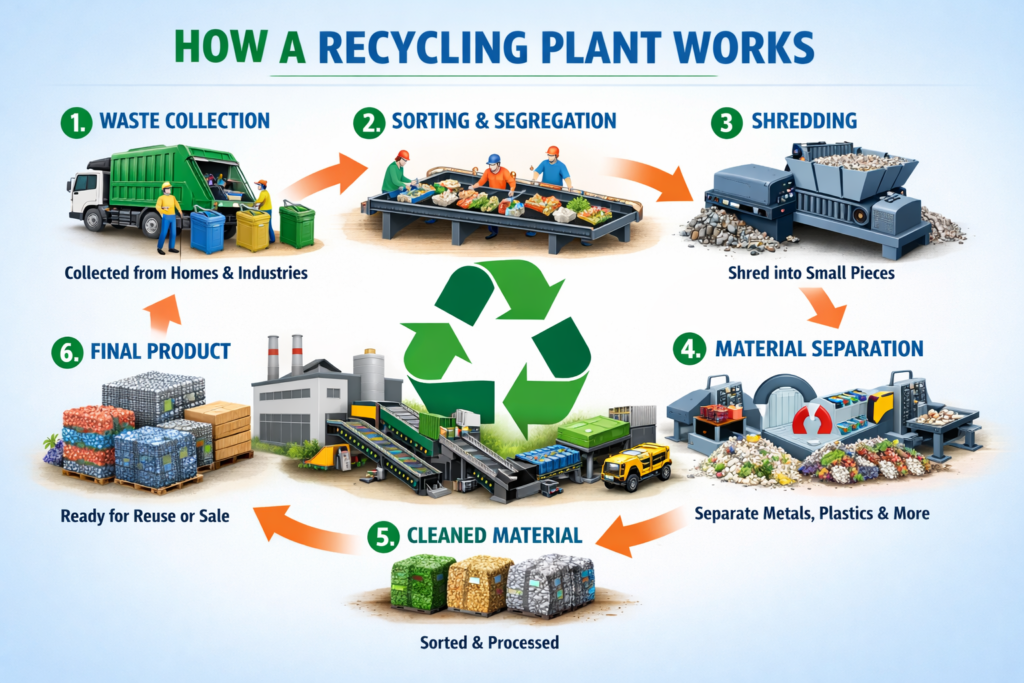
How Does a Recycling Plant Work? (Step-by-Step)
Here’s a simple step-by-step explanation of how a recycling plant operates:
Step 1: Waste Collection
Waste is collected from homes, industries, or municipal areas.
Step 2: Feeding the Waste
The waste is fed into the plant through conveyors or loaders.
Step 3: Sorting & Segregation
Different materials are separated using manual or automated systems.
Step 4: Shredding
Waste materials are shredded into smaller pieces using industrial shredders.
Step 5: Material Separation
Advanced machines separate plastics, metals, and other materials efficiently.
Step 6: Output Material
The recycled material is now ready to be reused in manufacturing or sold as raw material.
Types of Recycling Plants
Depending on the waste type, recycling plants can be:
- Plastic Recycling Plants
- E-Waste Recycling Plants
- Municipal Solid Waste (MSW) Plants
- Industrial Waste Recycling Plants
- Hazardous Waste Processing Plants
Each plant is designed differently to handle specific waste streams.
How We Help in Recycling Plant Setup
At Technisol, we provide complete recycling plant setup solutions, including:
- Plant design & layout planning
- High-quality recycling machinery
- Shredders, conveyors, separators, and screens
- Turnkey project execution
- Installation, testing, and commissioning support
Our goal is to help businesses build efficient, reliable, and sustainable recycling plants.
Conclusion
A recycling plant is not just a waste processing unit—it is a step toward a cleaner environment and a sustainable future. With the right planning, technology, and machinery, recycling can be both eco-friendly and profitable.
If you are planning to set up a recycling plant or want expert guidance, Technisol is here to help you at every step.
👉 Contact us today to discuss your recycling plant requirements.